

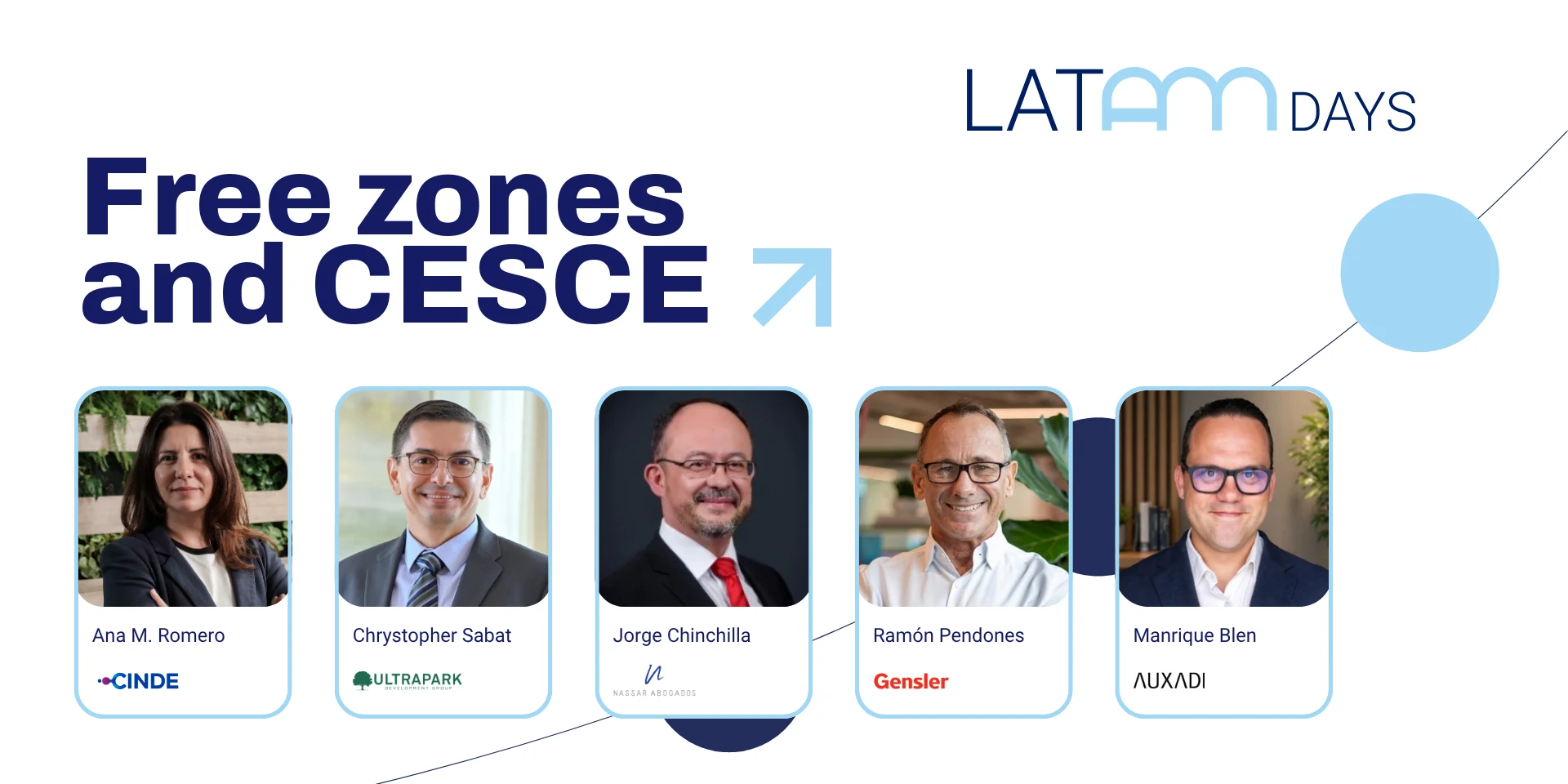

Free trade zones in Latin America: investment, incentives and business development
The panel discussion on free trade zones and CESCE analysed how free trade zone regimes in Latin America have evolved as tools to attract foreign direct investment and support the establishment of international companies.
Ana María Romero, Chrystopher Sabat, Jorge Chinchilla, Ramón Pendones and Manrique Blen discussed the role of tax incentives, economic substance, talent, infrastructure and business ecosystems in investment decisions.
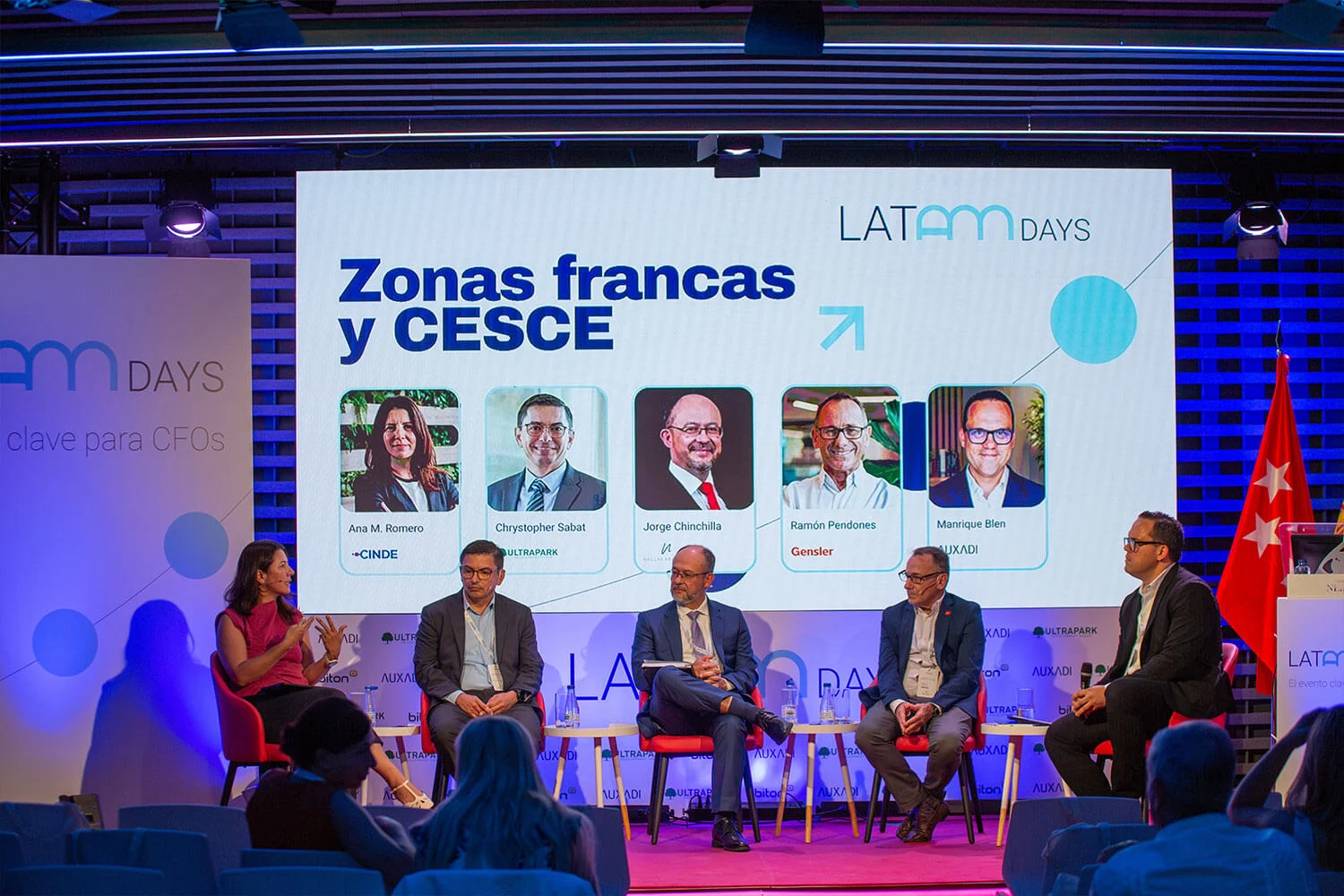
The starting point: the role of free trade zones in foreign investment
Free trade zones in Latin America remain an important tool for attracting foreign direct investment and helping international companies set up.
Although tax incentives remain important, companies increasingly value other factors such as talent, legal certainty, infrastructure, connectivity and how quickly they can start operating.
Discover more from LATAM Madrid 2026

Free trade zones: beyond tax savings
The panel’s main conclusion was that free trade zones are no longer based solely on tax savings.
For companies, it is essential that the country offers talent, stability, infrastructure, advice, services and the capacity to support their long-term growth.
This evolution turns free trade zones into comprehensive investment ecosystems, where tax incentives must be accompanied by real activity, value creation and operational capacity.
Key takeaways on free trade zones
Tax incentives are no longer the only deciding factor
Digitalisation and oversight of free trade zone regimes
Digitalisation and artificial intelligence are increasing tax authorities’ oversight capabilities.
Companies must ensure that their tax information and documentation are consistent, up to date and traceable, especially given the future evolution of measures such as BEPS and Pillar Two.

Keys to assessing a free trade zone in Latin America
Free trade zones in Latin America are becoming established as comprehensive ecosystems for investment and business development.
Their appeal no longer depends solely on tax incentives, but on the country’s ability to offer talent, stability, infrastructure, advice and specialist services.
For international companies, the challenge is to choose locations that allow them to operate securely, demonstrate economic substance and sustain long-term growth.
FAQs on free trade zones in Latin America






Auxadi and its commitment to internationalisation
Auxadi, a leading Spanish firm providing accounting services to multinationals and real estate funds, promotes LATAM Days as part of its commitment to business internationalisation. With an international presence and expertise in accounting, tax, payroll, transfer pricing and corporate legal services, it supports companies’ global growth through technology, local knowledge and strategic vision.

